Searching “padel vs pickleball” has become one of the fastest-growing comparison queries in American sports, with searches increasing 84% year-over-year as millions of Americans discover padel and wonder how it compares to the pickleball craze already sweeping the nation. If you’re a tennis player seeking a new challenge, a fitness enthusiast exploring options, or simply curious about the hype, understanding the differences and similarities between these two rapidly growing racquet sports will help you decide which, or both, might be right for you.
Padel and pickleball share important characteristics: both are racquet sports emphasizing doubles play, both are more accessible than traditional tennis, and both have experienced explosive growth in recent years. However, the sports differ significantly in court design, equipment, gameplay dynamics, and the overall experience they offer. Padel’s enclosed courts with wall play create longer, more strategic rallies, while pickleball’s smaller, open courts offer quicker, more accessible entry. Both provide excellent social, fitness, and competitive opportunities, but your personal preferences, goals, and circumstances will determine which suits you better.
This comprehensive comparison covers every meaningful difference between padel and pickleball, from court dimensions and equipment to scoring systems and skill requirements. Whether you’re trying to decide which sport to try first, considering adding padel to your pickleball routine, or simply curious about the distinction, this guide provides the detailed information you need to make informed decisions.
Court Design and Playing Environment
The most fundamental difference between padel and pickleball lies in their court environments, and this difference shapes nearly every other aspect of each sport.
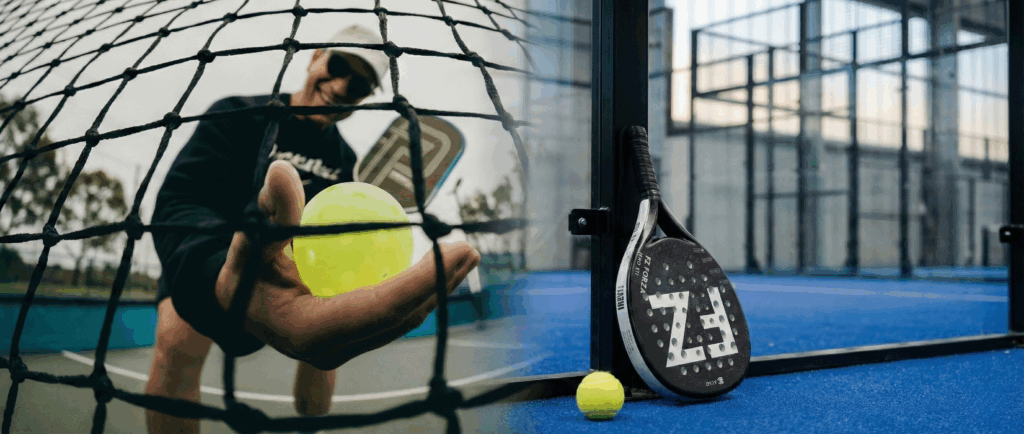
Padel courts measure 10 meters wide by 20 meters long (approximately 200 square meters), featuring enclosed glass walls on all sides that remain in play during rallies. The walls stand 3 meters tall at the ends and 4 meters tall on the sides, creating the characteristic “cage” that defines padel. The court surface is artificial grass or synthetic turf, providing consistent bounce and excellent traction. Climate-controlled indoor facilities are common, offering year-round play regardless of weather.
Pickleball courts measure just 6.1 meters wide by 13.4 meters long (approximately 82 square meters), roughly the size of a badminton court and dramatically smaller than padel. Courts have no walls; boundaries are marked lines only. Surfaces include concrete, asphalt, or specialized sport surfaces, often outdoors at parks and recreation facilities. The non-volley zone (kitchen) extends 2.1 meters from the net on both sides, creating specific rules about where players can position themselves for overhead shots.
The wall difference fundamentally changes gameplay. In padel, balls that would be “out” in other sports often remain in play after hitting walls, creating extended rallies and strategic possibilities impossible in open-court sports. Players can play the ball after it bounces off walls, use walls to create angles, and recover from difficult positions with wall support. This wall play makes padel more forgiving for beginners (balls stay in play longer) while adding strategic depth for advanced players.
Pickleball’s smaller, wall-less court concentrates action in a smaller area. Without walls to extend rallies, play is more focused around the net and non-volley zone. The smaller court means less running than padel but requires quicker reflexes and more precise positioning. Without wall support, mistakes are more immediately punishing; poor shots result in immediate point losses rather than recovery opportunities.
For Utah players, court availability considerations also differ. Padel requires purpose-built enclosed facilities, which explains why Utah currently has limited options (SLC Padel Club in Woods Cross, with Padel Den USA opening in Orem February 2026). Pickleball’s simpler court requirements have enabled faster growth, with public courts available at many parks throughout Utah County and the Wasatch Front.
Equipment Comparison: Paddles, Balls, and Gear
Both padel and pickleball use solid paddles rather than strung rackets, but the specific equipment differs significantly in design, materials, and cost.
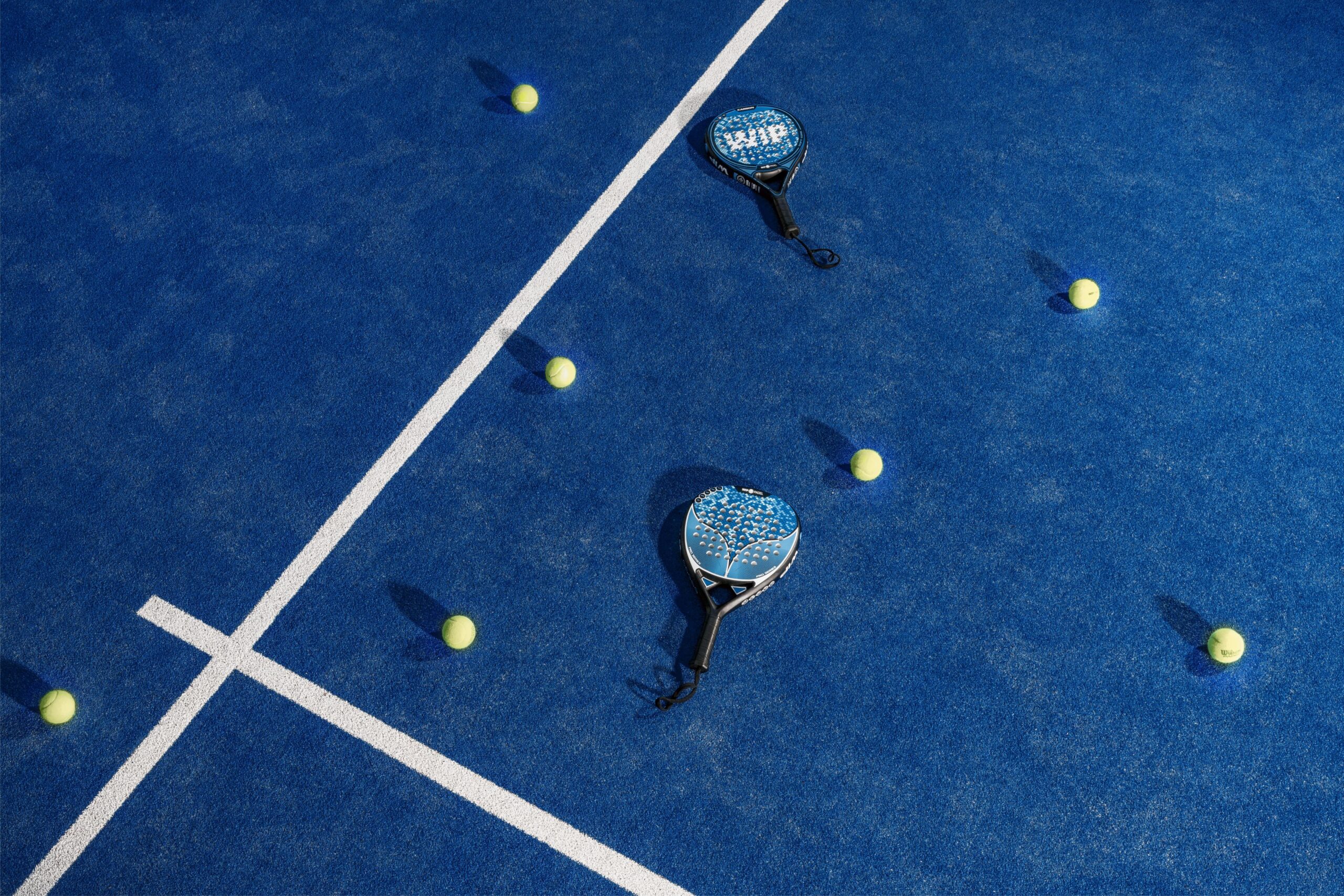
Padel paddles are larger, measuring approximately 4.5-5 inches wide by 10-11 inches long. They feature solid faces with circular perforations that create unique aerodynamic properties. Weights typically range from 350-400 grams. Two head shapes dominate: round (more control, larger sweet spot, ideal for beginners) and diamond (more power, smaller sweet spot, better for advanced players). Quality padel paddles range from $80-$300+, with most recreational players finding excellent options in the $100-$150 range. The solid face with holes creates a distinctive “thwack” sound when hitting the ball.
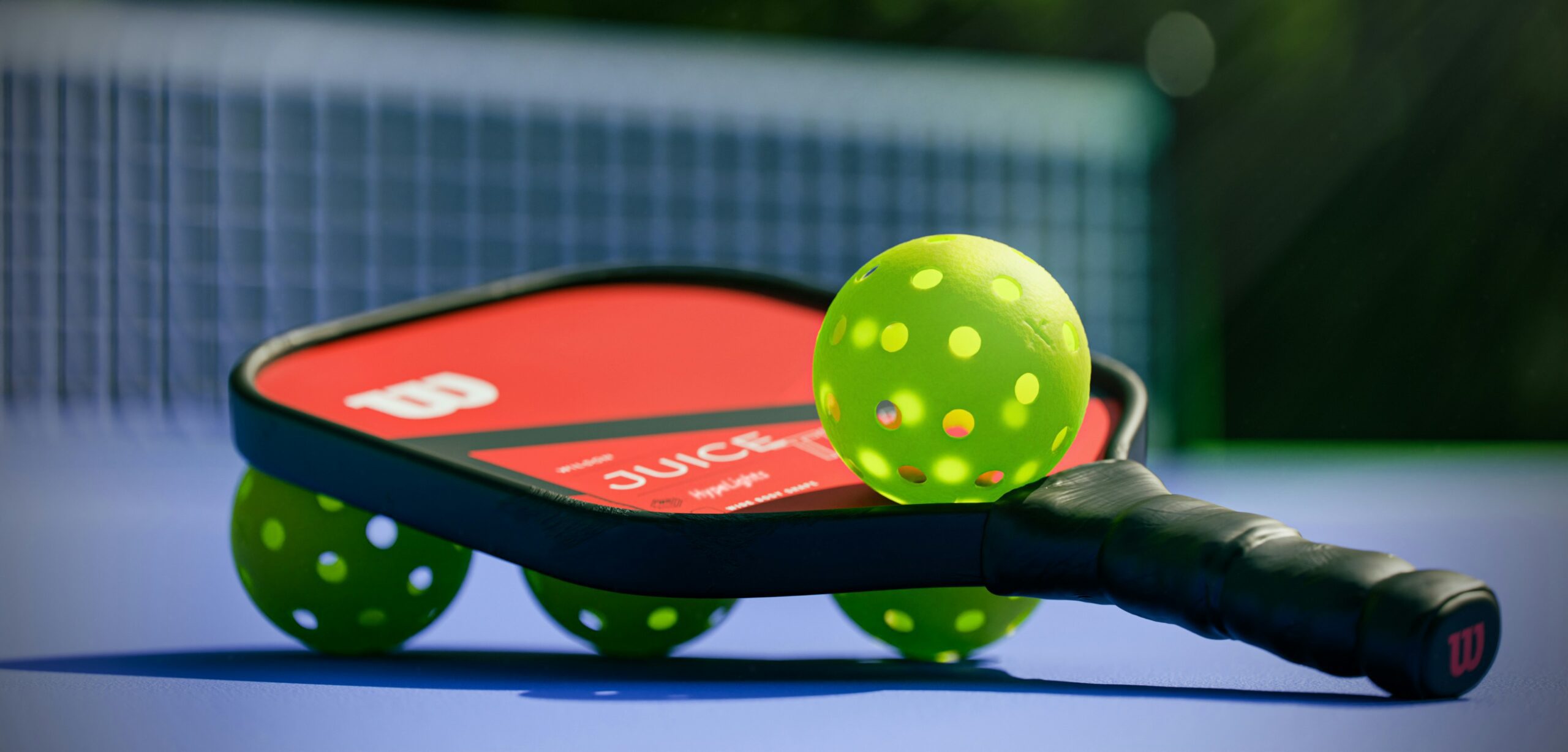
Pickleball paddles are smaller, roughly 8 inches wide by 15-16 inches long (similar in size to table tennis paddles but thicker). They feature solid faces without perforations, made from wood, graphite, composite materials, or polymer cores with facing materials. Weights typically range from 7-8.5 ounces, with lighter paddles offering better maneuverability and heavier paddles providing more power. Prices range from $20-$200+, with quality recreational paddles available for $50-$120.
Balls differ dramatically between the sports. Padel uses depressurized tennis balls, identical in appearance to regular tennis balls but with lower internal pressure, resulting in lower bounce and longer rally potential. These balls maintain consistent play characteristics and can be used for multiple sessions. Pickleball uses dedicated plastic balls with holes (similar to whiffle balls), available in indoor and outdoor variants. Outdoor balls are heavier and more wind-resistant; indoor balls are lighter and designed for gymnasium surfaces. The hole pattern creates the distinctive “pop” sound associated with pickleball.
Footwear requirements also differ. Padel shoes feature gum rubber soles optimized for artificial grass surfaces, providing excellent lateral traction for the quick side-to-side movements padel demands. They offer enhanced lateral support compared to running shoes. Pickleball shoes are designed for court surfaces (often hard courts or gymnasium floors) with forefoot cushioning for quick push-off movements. Both sports benefit from dedicated footwear, though tennis shoes can work temporarily for casual play in either sport.
Gameplay and Rally Characteristics
The gameplay experience in padel and pickleball feels distinctly different despite their shared doubles format and accessibility. Understanding these differences helps players choose the sport that matches their preferences.
Padel rallies tend to be longer and more methodical. The larger court means more ground to cover, but the wall support keeps balls in play for extended exchanges. Players cover approximately 3-5 kilometers during a typical padel match, with constant directional changes, lunges, and lateral shuffles providing comprehensive lower-body conditioning. The strategic element is deep; players must consider positioning, shot placement, wall angles, and partner coordination throughout rallies. The wall dynamics create unique tactical options: using walls to extend rallies, playing aggressive shots off walls, and recovering from difficult positions with wall support.
Pickleball rallies are generally faster and more reaction-oriented. The smaller court concentrates action, creating quicker exchanges and more frequent net play. The non-volley zone (kitchen) rules create characteristic “dinking” exchanges at the net, which are soft, targeted shots designed to force opponents into difficult positions. Without walls, every shot must land directly on the court surface to continue play, requiring precise shot placement. The faster pace demands quick reflexes and immediate decision-making, though total distance covered is less than padel.
For beginners, these differences matter significantly. Padel’s wall support and longer rallies often provide more immediate satisfaction. The ball stays in play longer, beginners can contribute to rallies even with imperfect technique, and the larger court feels less cramped. Pickleball’s smaller court and faster pace can feel overwhelming initially, with precision demands that punish mistakes more immediately. However, pickleball’s lower barrier to entry (simpler equipment, more public courts, shorter learning curve for basic competency) has driven its explosive growth.
For advanced players, both sports offer deep strategic engagement. Padel rewards shot placement, positioning, and partnership chemistry. The wall dynamics add layers of complexity that skilled players can exploit. Pickleball rewards quick hands, precise placement, and net dominance. The faster pace demands athletic reflexes and instant tactical decisions.
Both sports provide excellent fitness benefits. Padel offers more calorie burn and comprehensive conditioning through greater court coverage. Pickleball offers efficient exercise in shorter sessions, with its accessibility making it appealing for those with limited time.
Physical Demands and Fitness Benefits
Both padel and pickleball provide genuine physical workouts, but the specific demands and benefits differ in ways that may influence which sport suits you better.
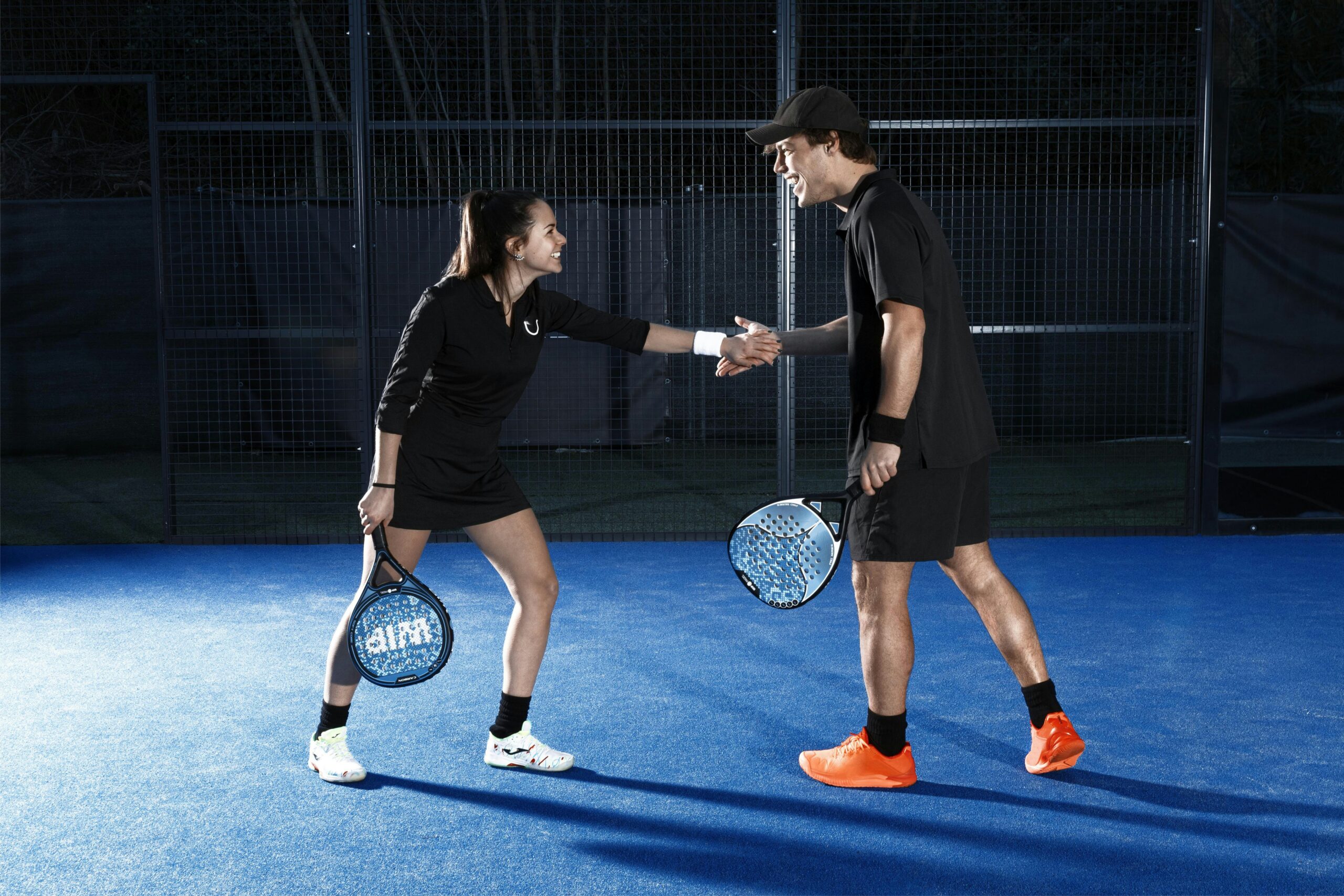
Padel offers a more comprehensive cardiovascular workout. The larger court (10m x 20m) requires covering significant distance during matches; players typically walk or jog 3-5 kilometers during an hour of play. This includes lateral shuffles, forward lunges, quick directional changes, and sustained movement throughout rallies. The extended rally lengths in padel (thanks to wall support) mean cardiovascular engagement continues throughout points rather than in short bursts.
The court coverage demands translate to stronger lower-body development. Leg strength, endurance, and agility all improve with regular padel play. Core engagement from rotational shots develops abdominal and back muscles. Upper-body conditioning comes from swinging paddles throughout play, though less intensively than in tennis.
Pickleball provides efficient exercise in concentrated bursts. The smaller court (6.1m x 13.4m) means less total distance covered, but the quick movements and frequent direction changes create high-intensity intervals. The concentration of action around the non-volley zone creates specific fitness demands: quick push-offs, rapid direction changes, and frequent lunges for dinking exchanges.
Pickleball’s lower-impact nature makes it appealing for those with joint concerns or those seeking sustainable long-term exercise. The court surfaces (often hard courts or gym floors) are more forgiving than concrete but less forgiving than padel’s artificial grass surfaces. The shorter rally lengths reduce cumulative impact compared to padel’s extended exchanges.
For Utah residents specifically, indoor options matter. Padel’s requirement for climate-controlled facilities means play continues year-round regardless of Utah’s seasonal extremes, valuable during winter months when outdoor pickleball courts may be inaccessible. Padel Den USA’s opening in February 2026 will provide Utah County residents with a year-round padel option that pickleball’s outdoor-focused infrastructure can’t match.
Both sports offer significant mental health benefits through social connection, strategic engagement, and flow-state experiences. The doubles format in both sports ensures social interaction; players always have a partner, building teamwork and communication skills alongside fitness benefits.
Skill Requirements and Learning Curves
Understanding the skill progression in each sport helps set realistic expectations for beginners and those considering which sport to pursue.
Pickleball offers a gentler initial learning curve. The smaller court means less ground to cover, the slower ball is easier to track, and the basic rules can be understood quickly. Most beginners can participate in basic social play within their first session, achieving a sense of competence and satisfaction early. The underhand serve is simple to execute, and the scoring system, while having quirks, is learnable.
However, advancing in pickleball requires developing specific skills: the dink shot (soft, targeted shots to the non-volley zone), proper positioning at the kitchen line, and the reflexes to counter quick exchanges at net. These skills take time to develop, and the gap between beginners and advanced players can feel significant during competitive play.
Padel has a more gradual initial learning curve but a higher ceiling. Beginners can enjoy their first session immediately due to wall support, forgiving equipment, and extended rallies; the ball stays in play even with imperfect technique, creating satisfying exchanges from the start. The doubles format means sharing court coverage with a partner, reducing individual performance pressure.
Advancing in padel involves developing technique for groundstrokes, volleys, and serves; understanding positioning and partnership dynamics; learning advanced shots like the bandeja (sidespin overhead) and various smash variations; and developing strategic awareness of wall play, shot selection, and court positioning. This deeper skill set rewards dedicated practice and provides goals for continuous improvement.
For tennis players, both sports offer accessible transitions. Tennis players often find padel’s scoring system (identical to tennis) and groundstroke mechanics (similar swing patterns) more intuitive initially. The wall play adds a new dimension that takes adaptation but feels familiar from squash experience. Pickleball’s underhand serve and kitchen rules require more significant adjustment from tennis habits.
For pickleball players, padel offers a natural progression. The similar doubles format and scoring (both use tennis-style scoring) create familiarity. The larger court and wall play add physical demands and strategic complexity that challenge and develop athletic abilities beyond pickleball’s requirements.
Community and Social Aspects
Both padel and pickleball excel at fostering social connections through their doubles-only formats, though the character of each sport’s community differs somewhat.
Pickleball’s rapid growth in the United States has created massive community infrastructure. With an estimated 40 million American players, pickleball communities exist in virtually every metropolitan area. Clubs, leagues, tournaments, and social groups abound, with particularly strong followings among older adults seeking active social engagement. The sport’s accessibility means players of all ages and abilities can participate together, creating intergenerational communities in many areas.
Padel’s community is smaller but growing rapidly, and is known for particular warmth toward newcomers. The sport’s European and Latin American heritage brings cultural elements of passion for competition, appreciation for technique, and European-style club atmospheres. Padel communities often emphasize the “lifestyle” aspect; facilities include bars, restaurants, and social spaces that extend the experience beyond court time.
For Utah specifically, both sports offer community-building opportunities. Pickleball’s established presence means numerous existing communities to join. Padel’s emergence creates opportunities for early adopters to be community builders, helping grow the sport while forming the foundational relationships that define padel’s social culture.
Padel Den USA’s programming will emphasize community development through league play, tournaments, social events, and member programming that brings people together beyond court time. The facility’s design includes community spaces for post-play connection, recognizing that padel’s appeal extends beyond the game itself.
Cost Comparison: Equipment and Playing
Understanding the cost structure helps budget-conscious players make informed decisions about which sport to pursue.
Pickleball offers dramatically lower entry costs. Basic paddles start around $20, with quality recreational paddles available for $50-80. Public pickleball courts are often free or low-cost at parks and recreation facilities. A complete pickleball setup (paddle, balls, appropriate footwear) can be acquired for under $100, making the sport highly accessible.
Padel requires more substantial equipment investment. Quality paddles range from $80-$300+, with beginners typically needing $100-$150 for appropriate equipment. Court access requires membership or hourly rental at dedicated facilities, typically $50-80 per hour at established clubs. The specialized court construction (glass walls, specific surfaces, climate control) means padel facilities have higher operational costs that translate to higher prices.
However, cost-per-play considerations complicate the comparison. Padel is always doubles, meaning court costs split four ways. At $60/hour, that’s $15 per person per hour, comparable to many fitness activities. Pickleball’s lower court costs (often free public courts) seem cheaper per hour but may involve equipment expenses for dedicated players who want quality gear.
Membership models at both sports offer value for regular players. Padel Den USA’s founding membership program, for example, will provide significant discounts for members who commit early. Similar membership programs at pickleball facilities offer reduced rates for regular play.
For Utah County residents specifically, the upcoming Padel Den USA opening (February 2026) will provide convenient local access that may reduce travel costs (gas, time) currently required to reach SLC Padel Club in Woods Cross. This convenience factor affects total cost-of-play in ways that simple hourly comparisons miss.
Which Sport Should You Choose?
Neither padel nor pickleball is objectively “better”; the right choice depends on your preferences, goals, and circumstances. Consider these factors when deciding.
Choose pickleball if:
- You want the lowest possible barrier to entry
- Public court access matters to you
- You prefer faster-paced, reflex-intensive games
- Budget is a primary concern
- You want the largest possible community of fellow players
- You prefer more immediate gratification from your first session
- You’re seeking low-impact exercise options
- You want to try multiple sports and pickleball seems like the easier starting point
Choose padel if:
- You seek a premium facility experience with climate-controlled courts
- You want longer rallies and more strategic depth
- You come from a tennis background or want racquet sport fundamentals
- You value the European-style club atmosphere
- You’re willing to invest more in equipment and court access for a distinctive experience
- You want to be an early adopter in Utah’s growing padel community
- You’re seeking comprehensive fitness benefits through greater court coverage
- You appreciate the unique strategic dimension of wall play
Try both: Many athletes discover they enjoy both sports for different reasons. Padel’s strategic wall play and pickleball’s quick reflexes can strengthen each other through cross-training. Utah’s expanding facility landscape (including both sports at many venues) makes exploring both increasingly easy. Consider trying introductory sessions at both sports before committing to one, or embrace both as complementary activities.
Finding Courts and Getting Started in Utah
For Utah residents ready to try either sport, several options exist.
For pickleball: Public courts are available at numerous parks throughout Utah County and the Wasatch Front. Utah County Parks and Recreation maintains courts at locations throughout the region. Private clubs and fitness centers increasingly offer pickleball programming. Apps like Pickleball Hub and local Facebook groups help find courts and players.
For padel: SLC Padel Club in Woods Cross (3085 S Wall Ave) offers Utah’s most established facility with four indoor courts. Padel Den USA will open in February 2026 in Orem, bringing Utah County its first dedicated padel facility. Both clubs offer introductory sessions, equipment rental, and partner matching for new players.
First-time recommendations:
- Wear comfortable athletic clothing and court shoes
- Arrive 10-15 minutes early to complete paperwork and get oriented
- Don’t worry about skill level; staff and experienced players welcome newcomers
- Bring water and expect to sweat
- Approach the experience with openness to learning
Frequently Asked Questions
Is padel harder than pickleball? Neither is inherently harder; they demand different skills. Padel requires more court coverage and strategic thinking. Pickleball demands quicker reflexes and precise placement. Most beginners find padel’s wall support and longer rallies more forgiving initially, while pickleball’s smaller court can feel cramped for newcomers.
Can I play both padel and pickleball? Absolutely, many athletes enjoy both sports. The similar doubles format creates familiarity, while the different court dynamics provide varied athletic challenges. Cross-training can improve overall fitness and racquet sport skills.
Which sport burns more calories? Padel generally burns more calories due to greater court coverage (3-5 km per match vs. less in pickleball). A typical padel match burns 400-700 calories depending on intensity.
Do I need a partner for either sport? Both sports are doubles-only, but most facilities help match solo players with partners. Arrive without a partner and staff will help find someone to play with.
What age groups play these sports? Both sports attract diverse age ranges. Pickleball has particularly strong followings among older adults. Padel’s faster pace and greater physical demands tend to attract slightly younger participants, though all ages enjoy both sports.
How quickly can I become competent? Pickleball offers faster basic competency; most players enjoy basic play within their first session. Padel requires similar initial adjustment but provides satisfying play from the start due to wall support and extended rallies. Competent play in either sport develops over months of regular practice.