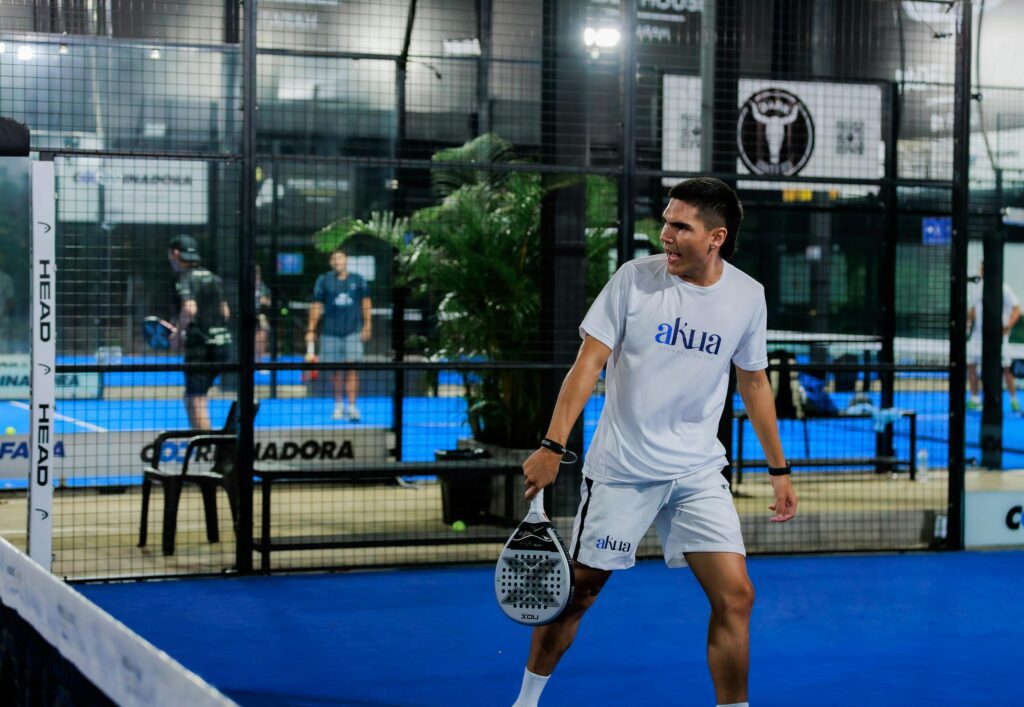
Padel tennis is a racket sport played exclusively in doubles on an enclosed court surrounded by glass walls and metal mesh fencing. The sport combines elements of tennis and squash, using solid paddles instead of strung rackets and lower-pressure tennis balls. Originally developed in Mexico in 1969, padel has grown to over 25 million players worldwide and is now expanding rapidly across the United States, with new facilities opening in Utah and communities nationwide embracing this social, accessible game.
Understanding the basic padel tennis rules enables new players to step onto the court with confidence. Unlike tennis, which requires extensive technique development before rallies become enjoyable, padel’s smaller court dimensions and wall play create immediate engagement for beginners while still offering deep strategic complexity for advancing players.
Padel Tennis Court and Equipment
A standard court measures 10 meters wide by 20 meters long, enclosed by walls that are 3 meters tall at the corners and 4 meters tall at the ends. The surface typically consists of artificial turf with sand infill to provide consistent bounce and safety. Unlike traditional tennis courts, you won’t see singles lanes here; official padel tennis competitions always use the doubles format.
The net stretches across the center at a height of 88 centimeters, which is significantly lower than a tennis net. This lower height, combined with the smaller court, creates the fast-paced, rally-oriented gameplay the sport is famous for.
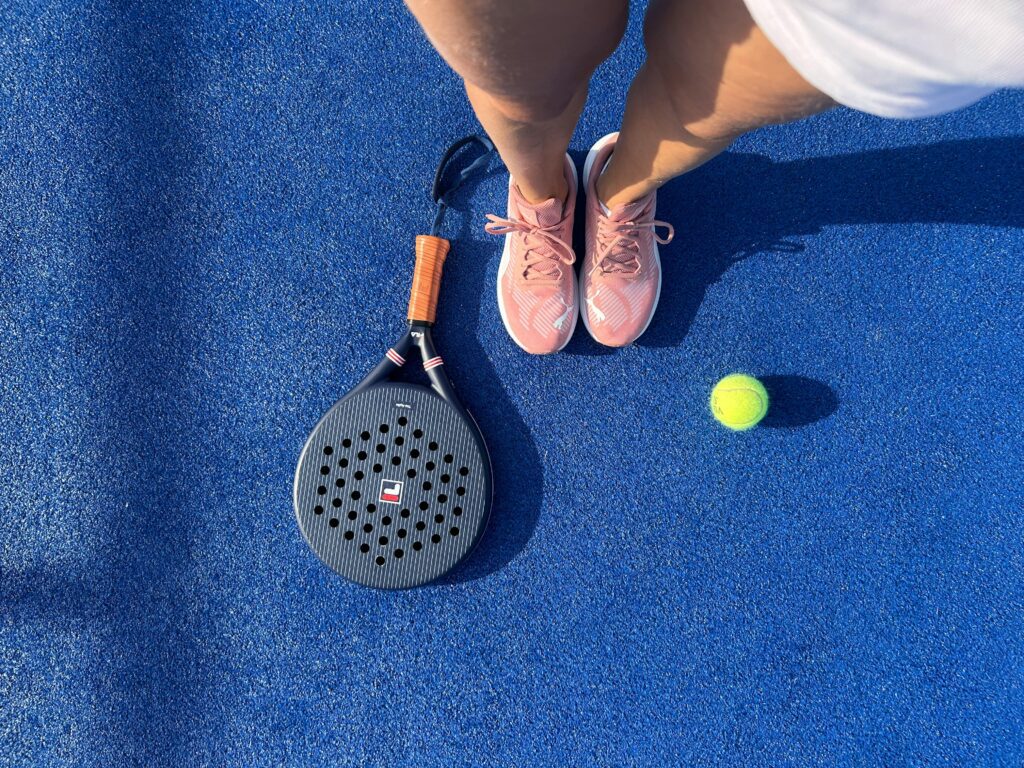
Rackets differ substantially from tennis rackets, featuring a solid head with holes rather than strings. The balls resemble tennis balls but have approximately 30% lower internal pressure. This results in a slower speed that favors longer rallies. You can read more about the equipment history on Wikipedia.
How to Serve in Padel Tennis
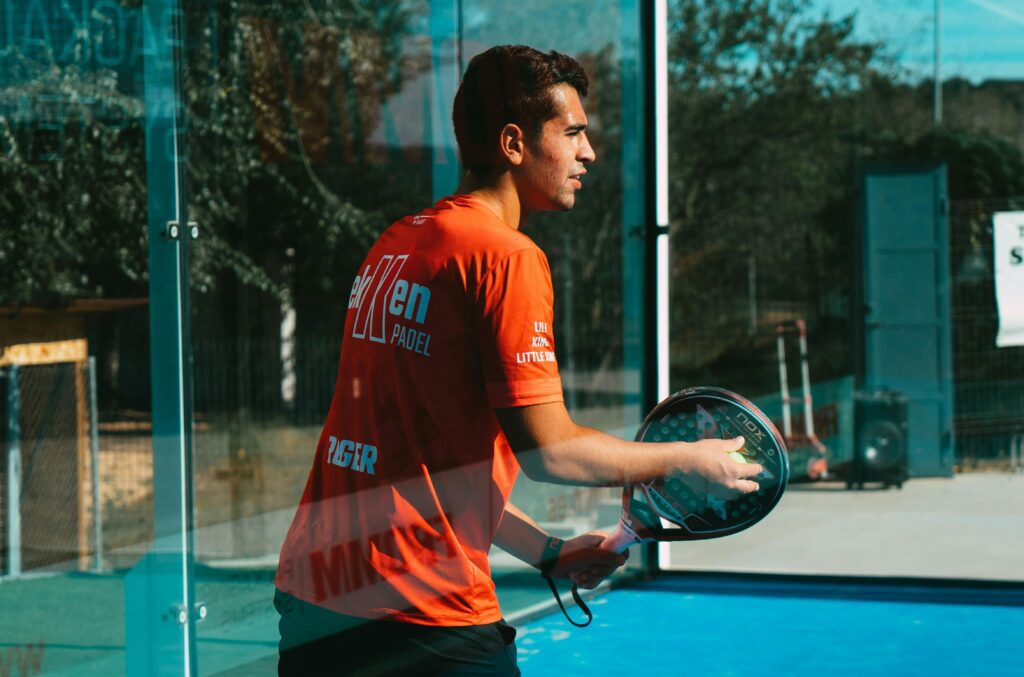
The serve follows specific requirements that distinguish it from other racket sports. The server must stand behind the service line, drop the ball, and let it bounce once. Crucially, players must execute the serve with an underhand motion, striking the ball at or below waist height.
After the bounce, the server hits the ball diagonally into the opposite service box. The serve must clear the net and land within the correct box without touching the mesh fencing. If the serve hits the wire fence before landing, the umpire calls a fault.
The serving team gets two attempts per point. If the first serve fails, the player may attempt a second. While there is no “let” if the ball hits the net and goes out, if the ball hits the net and lands in the correct box, the players replay the point.
Scoring in Padel Tennis Matches
The sport uses the same scoring terminology as tennis: 0 (love), 15, 30, 40, and game. Points progress sequentially, and if the score reaches 40-30, the next point wins the game.
At 40-40 (deuce), padel tennis rules allow for two different systems. The traditional system requires a team to win two consecutive points to secure the game. However, many clubs now use the “Golden Point” (or No-Ad) system, where a single sudden-death point decides the game. In this scenario, the receiving team chooses which side the server must serve to, adding a layer of strategy to the deciding moment.
The first team to reach 6 games with a 2-game advantage wins the set. At 6-6, a 7-point tiebreak typically decides the outcome.
Common Faults in Padel Tennis
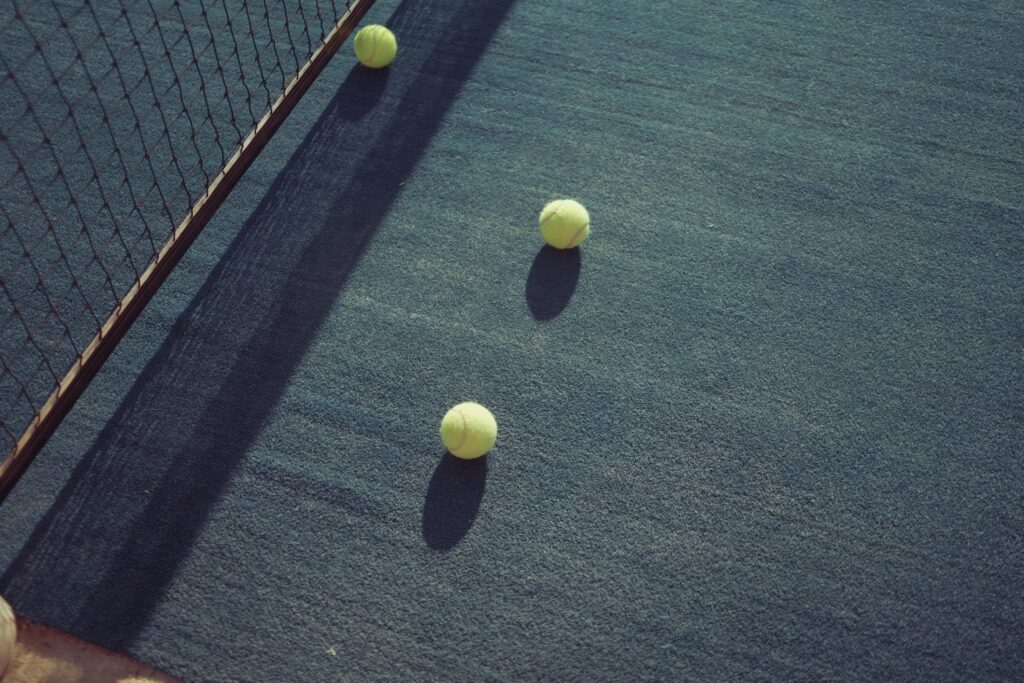
Understanding common faults helps beginners avoid frustrating mistakes. The most frequent error occurs when the ball bounces twice on a player’s side, which results in a point for the opposing team.
Hitting the ball into the net or hitting the mesh fencing on your own side is also a fault. It is important to remember that while the glass walls are “in play” after a bounce, the mesh fencing is generally out of bounds during a rally.
Additionally, players cannot volley the return of serve. The receiving team must let the ball bounce once before hitting their return. Touching the net with the racket or body at any time results in an immediate loss of the point. For a deep dive into these regulations, you can reference the official LTA Padel guidelines.
Padel Tennis vs. Pickleball: Key Differences
Many American players discover this sport after playing pickleball. While both use underhand serves and smaller courts, the similarities end there.
Pickleball uses a plastic wiffle-style ball and a court with no walls. Padel tennis uses a pressurized rubber ball and a court where the walls are active parts of the game. The most significant difference is the use of the glass walls; players routinely hit the ball off the back and side glass to keep the point alive. This transforms the game into a 3D strategic challenge that experienced players often describe as “chess with cardio.”
Starting Your Padel Tennis Journey in Utah
Utah’s community is growing rapidly, with new facilities preparing to open throughout the state. Padel Den USA in Orem is Utah County’s first dedicated facility. It anticipates opening in March 2026 with professional-grade courts and structured programming.
New players benefit immensely from lessons. You can sign up for professional padel clinics at Padel Den USA to learn the proper grip, positioning, and wall strategy. While group lessons are great for socializing, private sessions can help you master the unique mechanics of the sport faster.
FAQ: Mastering Padel Tennis
How long does a match typically last?
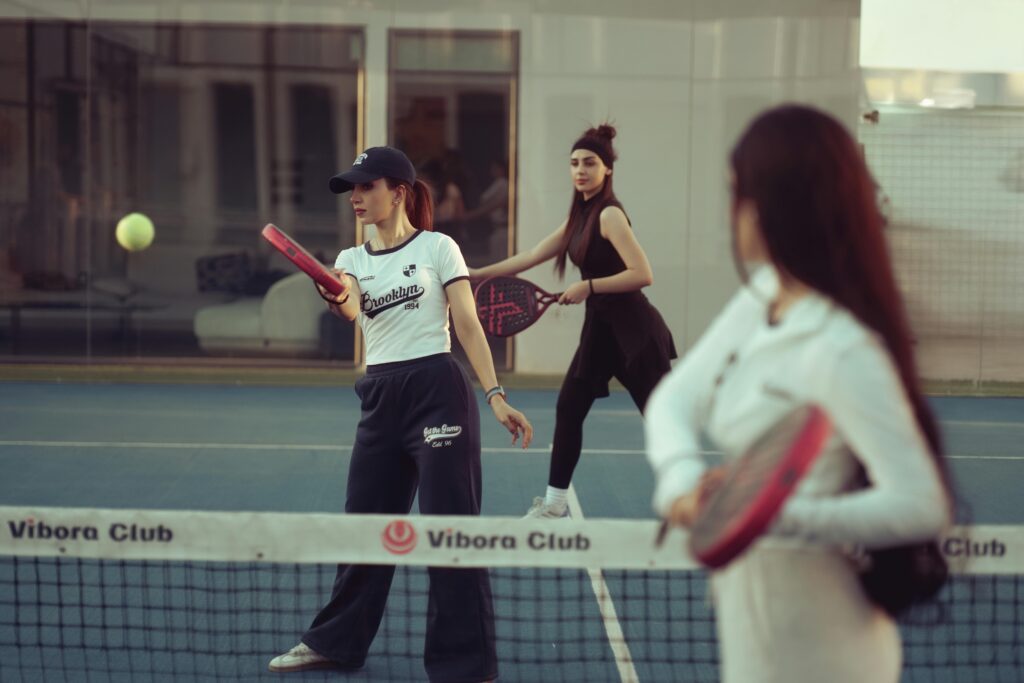
Most matches conclude within 90 minutes to 2 hours. The lower ball speed leads to longer rallies than in traditional tennis, but the continuous flow of play keeps the game moving quickly.
Can you play singles?
Official padel tennis rules mandate doubles play. The court dimensions and net height are designed specifically for four players. While some facilities offer “singles courts” (which are narrower), competitive play is strictly a team sport.
What happens if the ball hits the wall directly?
If you hit the ball and it strikes the opponent’s wall (glass or fence) without bouncing on the ground first, it is “out.” The ball must always bounce on the turf before hitting the fence or glass.
Do you need special shoes?
While standard court shoes work, shoes designed specifically for padel tennis provide better grip on the artificial turf and more lateral stability. Using the correct footwear helps you move safely and adhere to court etiquette by protecting the surface.