
If you played indoor sports in the 1980s or 1990s, you likely spent time inside a four-wall racquetball court. Because both sports put the walls into play, comparing padel vs racquetball is incredibly common.
However, once the first rally begins, the two games demand completely different instincts. While they share a common thread of utilizing wall-bounce geometry, they use completely different equipment, scoring systems, and overall strategies. If you are curious about transitioning to the world’s fastest-growing racket sport, here is a breakdown of the key differences between padel and racquetball.
1. The Court Setup: The Net vs. The Front Wall
The most obvious difference between the two sports is how you score and where you stand.
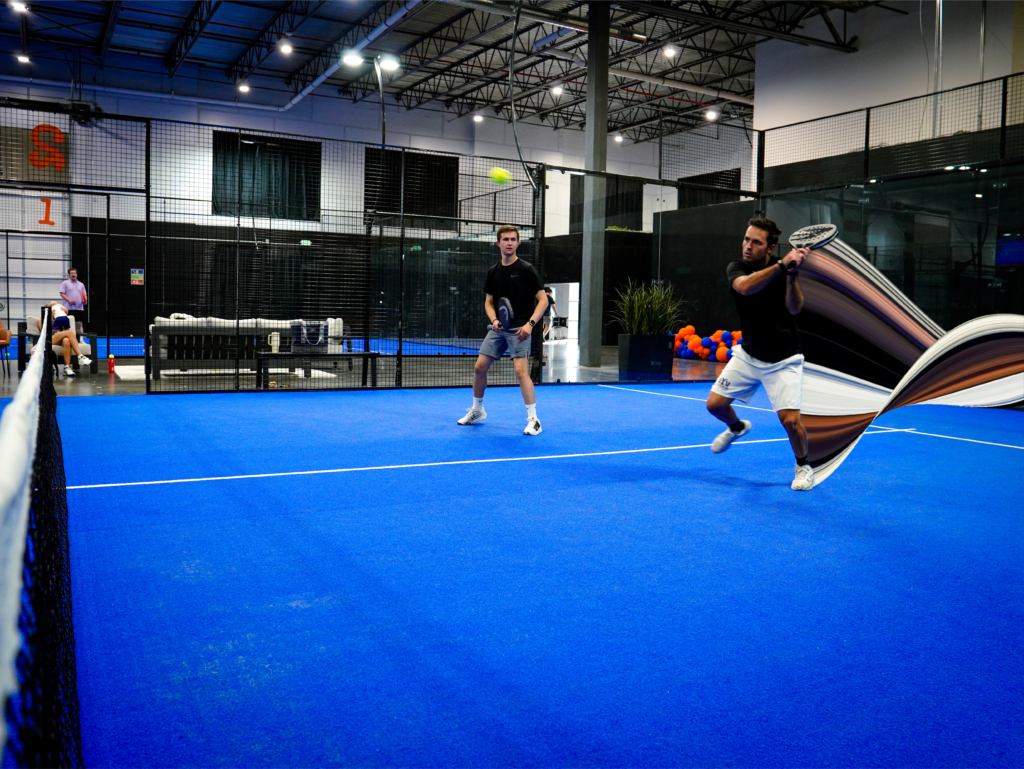
- Padel: The court is 20 meters long and 10 meters wide, and it is divided in the middle by a net. The play area is enclosed by glass walls and metal mesh fencing. You play the ball over the net to your opponents, and the ball can safely rebound off the back or side glass after it bounces in the opponent’s court.
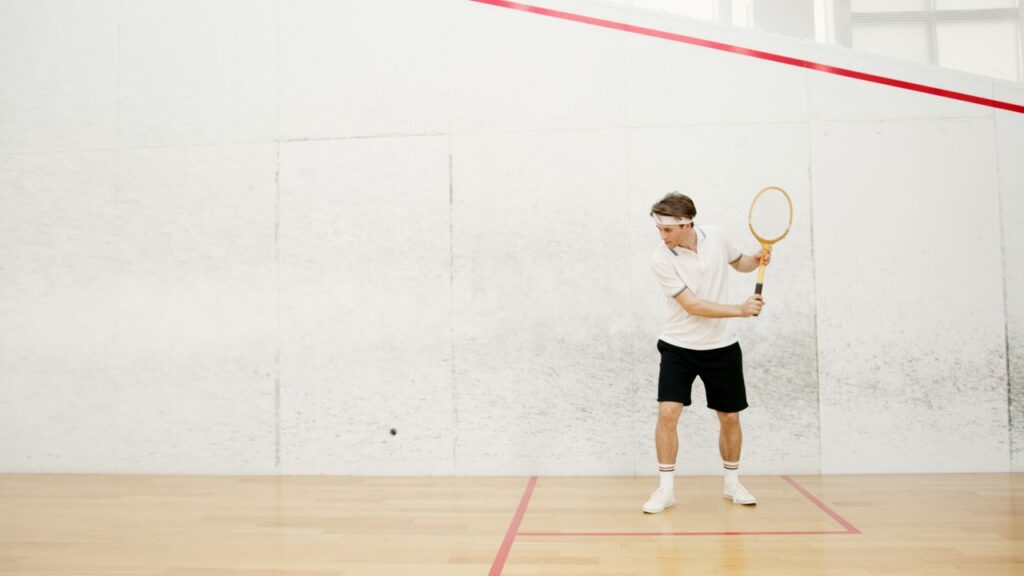
- Racquetball: As outlined by the International Racquetball Federation, the court is a sealed 40 x 20 x 20-foot box. There is no net; instead, players hit the ball into a front wall target. Furthermore, racquetball features a live ceiling that is part of the active playing area.
2. The Equipment: Strings vs. Solid Foam
The equipment overlap between these two sports is much smaller than the court overlap. This single factor drastically changes the required swing mechanics and overall ball speed.
- The Racket: Racquetball uses a strung racquet that provides a massive amount of bouncy rebound. Padel uses a solid racket that is completely perforated with holes and shorter than a tennis racquet. If you are unsure where to start, check out our guide on how to choose your first padel racket.
- The Ball: A racquetball is a hollow rubber ball that is built for sharp, aggressive rebounds off hard walls, making it play much faster. A padel ball is a felt-covered rubber ball with slightly lower internal pressure, which keeps the ball speed manageable and ensures the rally stays playable inside the glass.
3. Gameplay Dynamics and Strategy
Because of the heavy rebound from the strings, racquetball rallies can be incredibly fast and direct. A drive serve or a low kill shot in racquetball can end a point in the blink of an eye before a beginner even reads the bounce.
Padel, on the other hand, is a highly tactical game built around court coverage. Because the rackets are solid and the balls have lower pressure, you cannot simply blast the ball past your opponents. Instead, good padel requires smart court positioning, playing sharp angles, and utilizing lobs. If you want to see this strategy at the highest level, you can watch official tournaments governed by the International Padel Federation (FIP).

4. Singles vs. Doubles
Finally, the social format of the games sets them apart.
- Racquetball is usually played as a one-on-one singles match.
- Padel is typically played as a highly social doubles match.
- Racquetball generally uses games played to 15 points, while padel uses standard tennis scoring rules.
Because you are always playing with a partner, padel is incredibly social. You have to communicate, cover the turf together, and strategize as a complete unit.
Ready to Try the Ultimate Wall Sport at Padel Den?
If you love the dynamic angles and geometry of racquetball but want a more social, tactical game, padel is your perfect match.
Are you ready to step into the glass cage? Grab your racket, review the basic padel rules, gather a foursome, and come see why everyone is obsessed with this amazing sport.